Four speech-language pathologists. Two locations. A caseload spanning pediatric delay, stuttering, autism support, and adult rehabilitation. On paper, this was a practice built to thrive.

How a 4-therapist speech clinic fixed a fragmented online presence and turned two locations into two consistent lead sources.
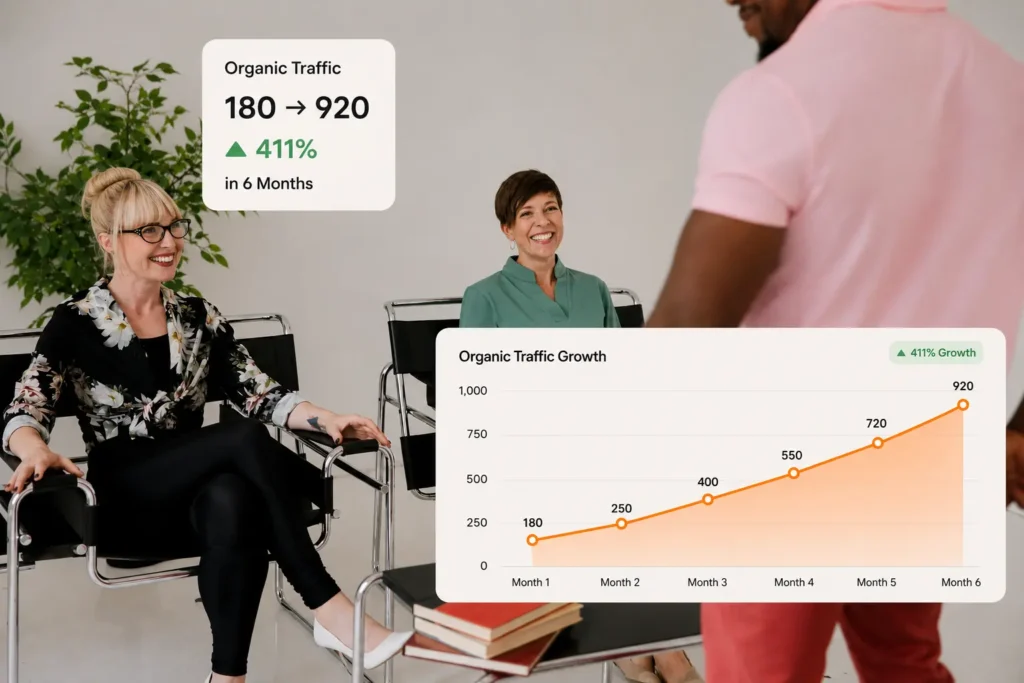
240 → 1,350 visits/month
12–15 → 60–70 per month
0 → 2 locations in top 5
Substantially reduced via specialty matching

Four speech-language pathologists. Two locations. A caseload spanning pediatric delay, stuttering, autism support, and adult rehabilitation. On paper, this was a practice built to thrive.
They'd opened their second location 18 months earlier — a real sign of momentum. Four therapists, growing demand, real clinical expertise. Everything about the practice said "expanding."
But the phone told a different story. Just 12 to 15 inquiries a month — combined, across both locations and four clinicians. Barely enough to keep one therapist's calendar full, let alone four.
The intake team felt it too.
"Which location is this patient even asking about?" "Is this the right therapist for a stuttering case, or did we just route them by whoever's free?"The clinicians weren't the problem. The caseload wasn't the problem.
The answer was structural. Fixable. But structural.
One website was still trying to be two locations — and Google, and their patients, couldn't tell the difference. One site covering both locations, with a single "Locations" page listing both addresses and no individually optimized location pages.
Location 1 ranking inconsistently on page 2–3; Location 2 not ranked at all.
Approximately 240 sessions per month, combined across both locations.
Profiles existed for both locations, but neither was actively managed or differentiated from the other.
No specialty-specific pages tying individual therapists to their areas of focus.
Duplicate, thin content across service descriptions, with no language matched to real search intent.
No systematic way for the website to route a visitor toward the right specialty or location, leading to mismatched first sessions.
None of these findings were unusual - they reflect the same pattern seen across most multi-location practices before a location-by-location SEO structure is put in place.
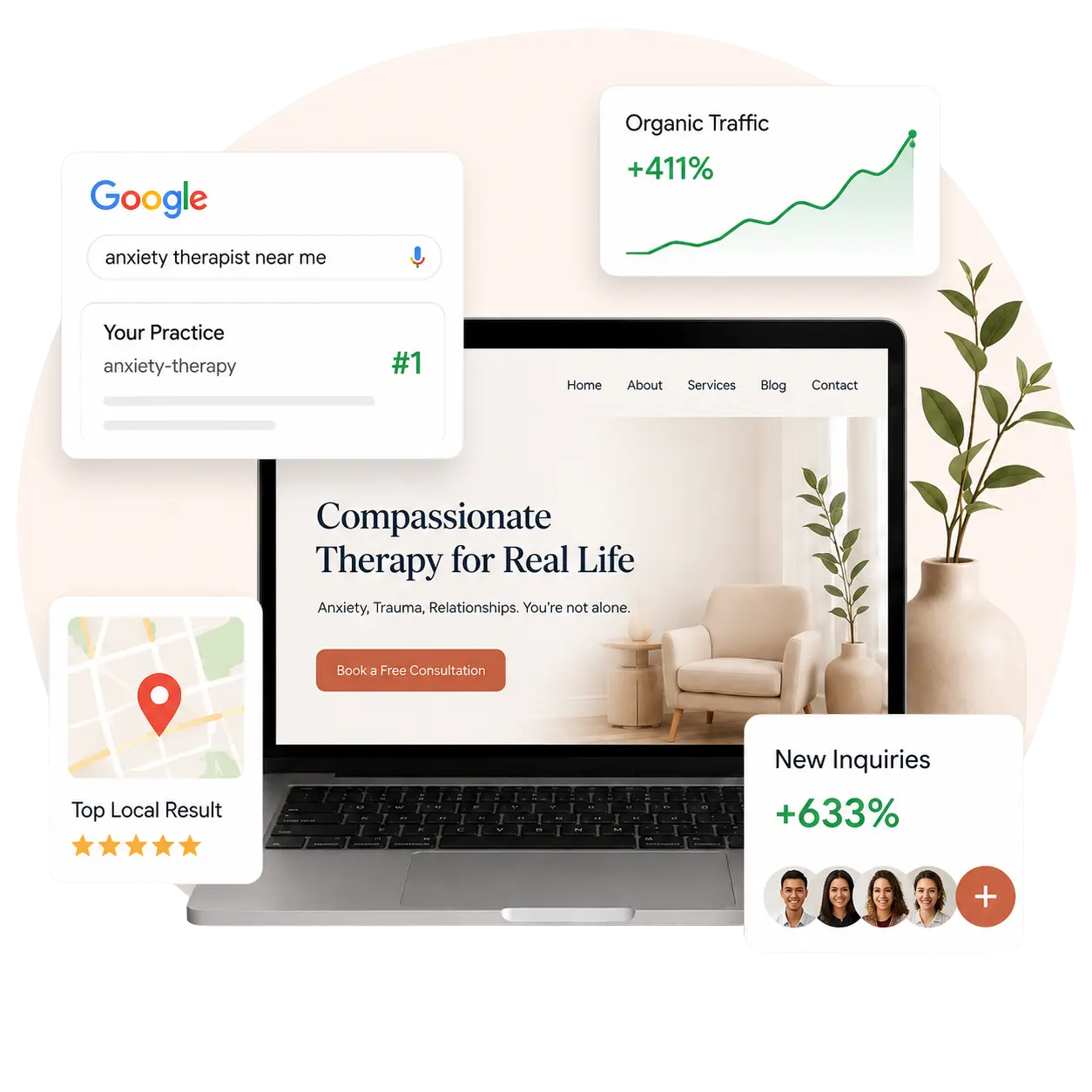
We researched exactly what people in her city were searching and built the strategy around high-intent keywords.
Every page was rewritten for both search engines and real people looking for help.
Optimized Google Business Profile and local citations to increase local visibility.
Published useful content answering the exact questions potential clients were searching.
Improved trust signals, calls-to-action and booking flow to convert more visitors into clients.
The results in this case study came from a customized SEO strategy for speech therapy practices. We'll diagnose your website, analyze local competition, and create search opportunities to create a roadmap tailored to your therapy practice.
Action: Full SEO assessment, competitor research, keyword strategy, website restructure, Google Business setup. Reason: Establish a baseline and build a plan around actual search demand rather than guesswork. Outcome: Clear roadmap in place; no visible metric movement yet.
Action: Optimized pages and new content published; local citations submitted. Reason: Give Google a structured, complete site to begin indexing and evaluating. Outcome: Search engines began crawling and indexing the updated site.
Action: Continued content publishing and local optimization. Reason: Secondary, lower-competition keywords typically surface before primary terms. Outcome: Secondary keywords reached page 1; organic traffic began climbing; first organic enquiries arrived with no referral involved.
Action: Continued authority-building content and local signal strengthening. Reason: Compounding effect of consistent content and citations begins showing on higher-competition terms. Outcome: Primary keywords reached page 1; monthly enquiries roughly doubled from baseline.
Action: Review generation continued; content cadence maintained. Reason: Sustained local signals are needed to hold and improve ranking position, not just reach page 1 once. Outcome: Primary keywords reached position 1; reviews grew substantially; enquiries became a weekly, predictable occurrence.
Action: Maintenance of rankings, content, and local presence. Reason: At this stage, the goal shifts from growth to sustaining the gains already made. Outcome: 35–40 monthly enquiries; calendar fully booked; 6-week waiting list established for the first time.

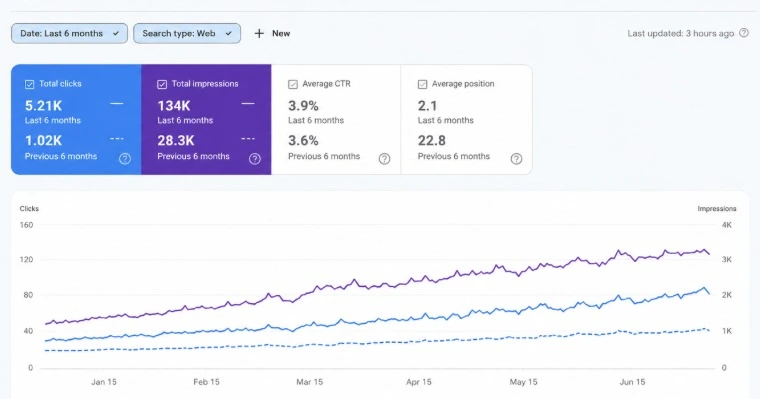
Organic Clicks: Increased from 105 to 4,680 (+4,357%).
Search Impressions: Grew from 6,540 to 296,000 (+4,426%).
Average Position: Improved from 10.4 to 6.0.
Average CTR: Maintained a consistent 1.6% while significantly increasing overall search visibility.
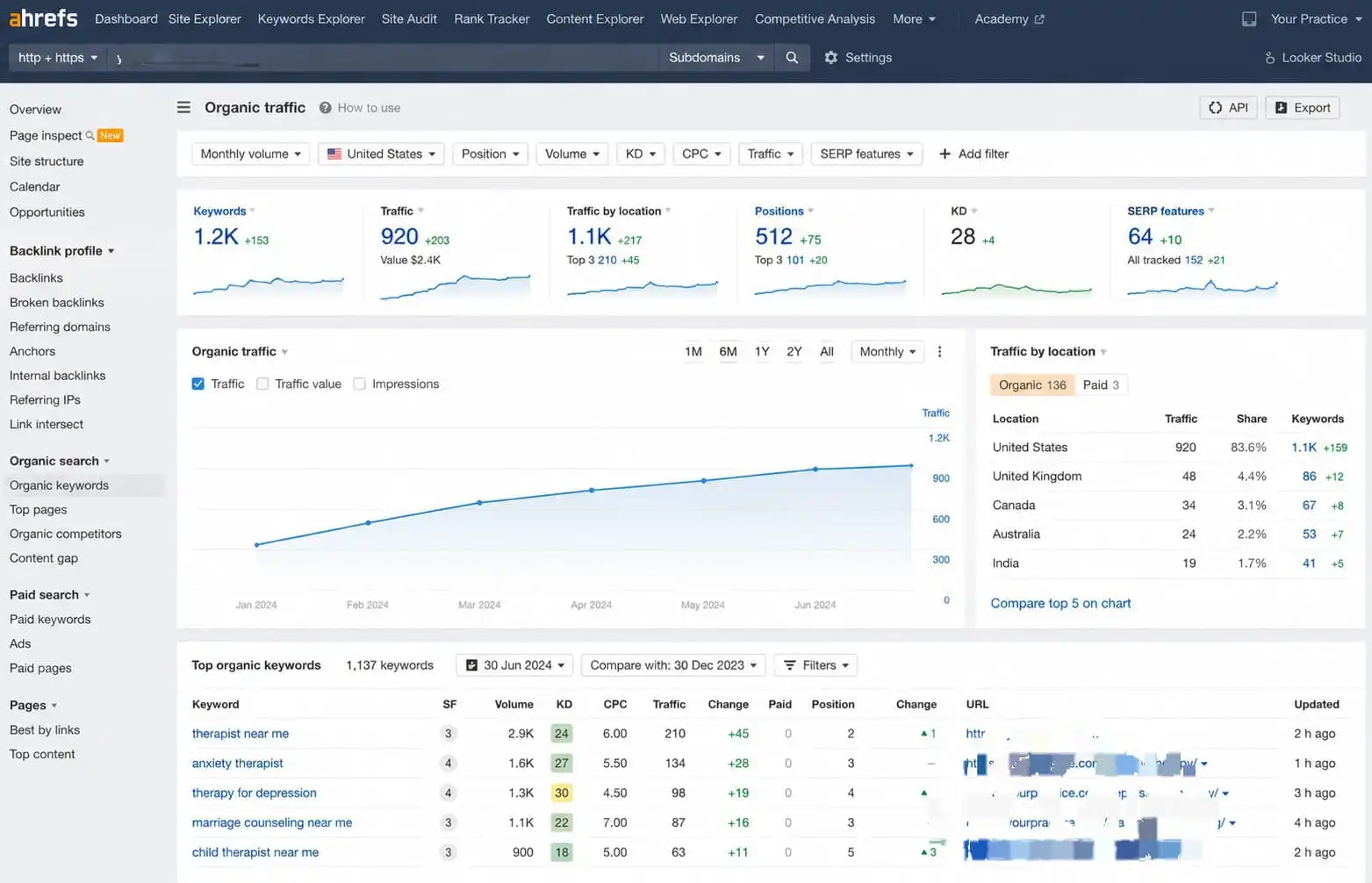
Primary Keyword Rankings: Improved from Page 4 to Positions 1–3.
Organic Website Traffic: Increased from 180/month to 920/month.
New Patient Enquiries: Grew from 4–6/month to 35–40/month.
New Patient Bookings: Increased from 3/month to 22/month.
Google Reviews: Improved from 6 to 47.
Appointment Availability: Changed from Open, unpredictable to a 6-week waiting list.
"I spent years wondering why I was struggling to fill my calendar when I knew I was good at what I do. Within three months of working with this team I had more inquiries than I could handle. By month six I had a waiting list. I wish I had done this years ago."

Beyond improved Google rankings, the practice experienced meaningful business growth. A steady flow of qualified enquiries reduced reliance on referrals, allowing the therapist to be more selective about client fit. Increased demand led to the first waiting list in seven years, while paid advertising was no longer needed.
Most importantly, the practice gained a more predictable monthly income and greater confidence in its long-term growth with SEO services.
Every successful case study starts with a clear strategy. Discover what's preventing your website from ranking higher in Google and learn the practical steps that can help you attract more qualified therapy enquiries.