This seo guide for therapists is for private practices that want to be found by the right clients, not just more traffic. Most therapy clients never scroll past the first page of Google. When someone finally decides to get help, they usually search on their phone, compare a few results, and contact only two or three practices. If your practice is not there, you do not exist to that person.
SEO for therapists is different from SEO for other local businesses. Your future clients are often nervous, and privacy matters to them. That is why this guide starts with accurate service information, clear next steps, and honest details about who you can help and where. It then covers keyword research, service pages,local search, content, technical fixes, and measurement, in the order that helps a real practice first.
Google can now show a map listing, a website result, or an AI answer for the same search, and a practice can be visible in one and missing from another. This guide explains that difference, and it follows the ethics rules that govern therapists, including how to handle reviews without asking current clients. The work takes time. Early movement often shows in 60 to 90 days, and competitive terms can take 4 to 6 months. There is no shortcut here, and no ranking is promised. The strategies reflect patterns seen across more than 50 therapy practices, and the goal is simple. Be easy to find, easy to understand, and easy to trust.
What does SEO mean for a private therapy practice?
SEO means making useful information about your practice easy to find in search. For a solo clinician, it starts with local or authorized telehealth intent. It means care you can actually provide, in a place you can actually serve. First write the service, who it is for, location, payment, and availability. If the page does not explain the next step, ranking alone does not help.
Does SEO for Therapists Add Value?
Yes, when it is done right. Most clients search on Google, compare a few results, and contact only two or three practices. A page that ranks keeps bringing inquiries without a per click cost. Early movement often shows in 60 to 90 days. Competitive terms can take 4 to 6 months. Judge it by inquiries and first sessions, not by traffic alone.
Why Therapists SEO Is Different
Therapy clients are often nervous, and privacy is a legal and ethical duty. Ethics rules also restrict asking current clients for testimonials. So this SEO must do two jobs at once. It must satisfy Google and reassure a nervous human. The reader silently asks two questions. Do you have what I need? Can I trust you?
How Search Engines Decide Who Shows Up in Search Results
Google rewards useful, trustworthy, people first content. It looks for real experience, expertise, authoritativeness, and trustworthiness. That is EEAT. Health content has a higher standard, because wrong information can cause real harm. A good therapist already fits that standard. The job is to show it clearly, not hide it behind a vague homepage.
Why Most Therapy Clients Start With a Google Search
When someone decides to get help, they usually search on their phone. It is often late at night, after putting it off for months. They want specific help near them, from someone they can trust. If your practice is not on the first page, someone else gets the call. SEO earns that place. Ads stop when payment stops.
How do the map pack, organic results, and AI answers differ?
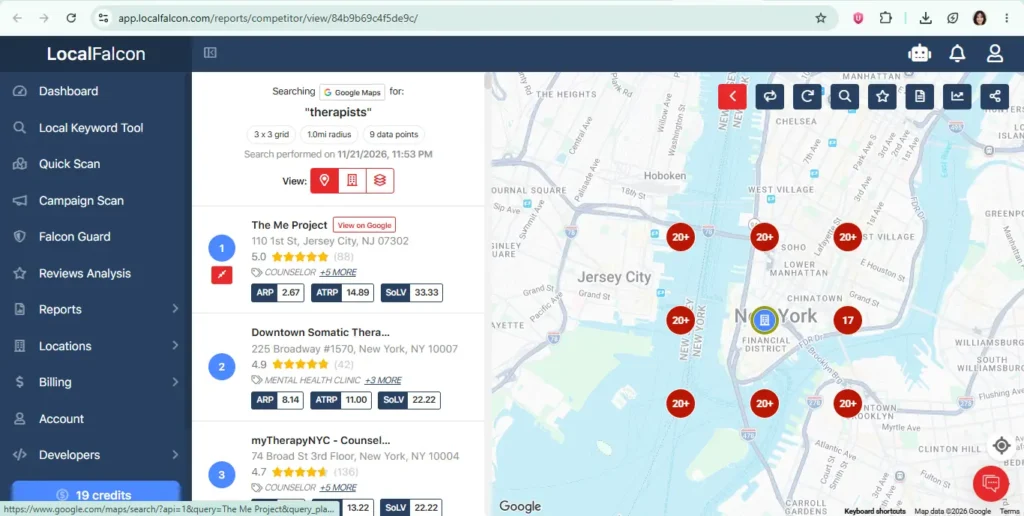
Google can show three kinds of results. The map pack is the local listing, usually three practices on a map. Organic results are the website listings below it. AI answers summarize information, and a person may read only that one answer. A practice can be visible in one and missing in another. Check the query, the place, and the result type before you fix anything.
Apply the same factual standards to AI discovery
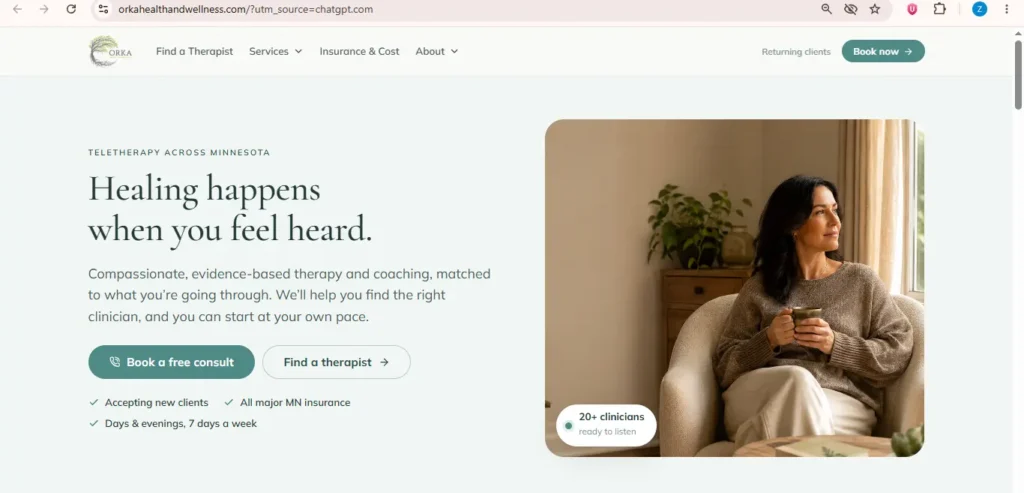
There is no special markup for AI, and no package can guarantee a citation. Use the same accurate information, a usable site, and consistent details across your website, your Google Business Profile, and trusted directories. If the information is wrong or inconsistent, AI will ignore you or describe you wrongly. A wrong description is worse than no mention.
Finding the Right Keywords for Your Practice
Keywords decide every page, post, and title that follows. Skip this step and every hour on your website is a guess. This seo guide for therapists starts here for that reason.
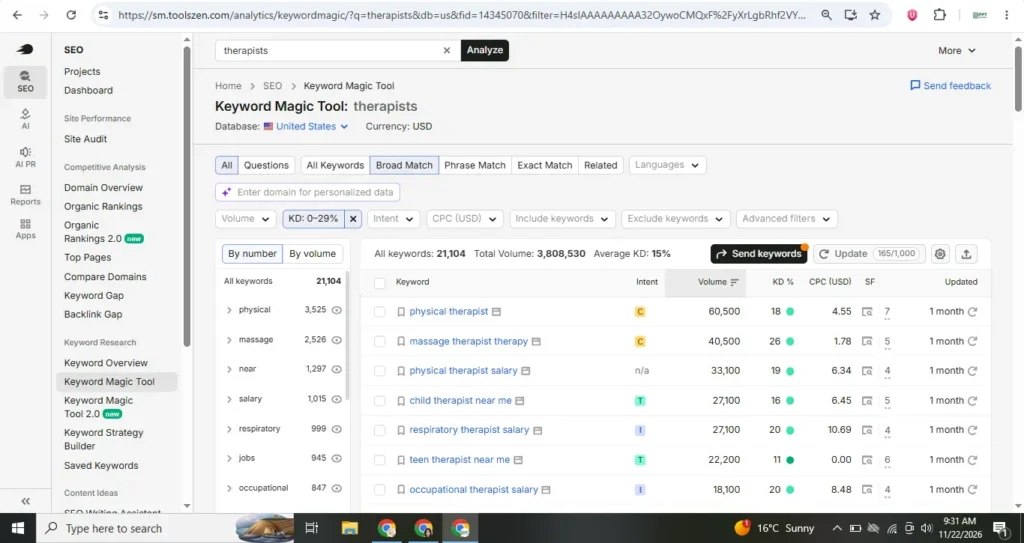
Free Tools That Show What Clients Actually Search
You do not need an expensive platform to begin. Good keyword research tools for therapists include free options from Google. Autocomplete shows real searches as you type. Keyword Planner shows monthly search ranges. Search Console shows the exact queries your pages already appear for. These tools also reveal terms you would not think of on your own, like sliding scale therapy and does insurance cover therapy. A practice in a mid sized city can build a useful list in one afternoon with these free resources.
Why Specific Phrases Win First
Long tail keywords are longer, more specific phrases with lower search volume. They are easier to rank for than broad head terms. Therapy has huge search volume and very high difficulty. A specific phrase like EMDR therapist for first responders has far fewer searches and almost no competition, and the person typing it is ready to book. A new website should build its early work around dozens of long tail keywords. Rankings on specific terms build authority on broad terms over time.
Match the Reason Behind the Search
Search intent is the reason behind the query, and your content must match it. Someone searching what is EMDR wants education. Someone searching emdr therapy near me wants a provider today. If you answer the first search with a booking page, or the second with a long essay, visitors leave, and Google notices. Match the intent, keep people on the page, and the search engine learns that your result satisfied the search.
Give Every Page One Clear Keyword Job
A keyword map assigns keywords to specific pages, one primary keyword per page, plus a small cluster of related terms. Your anxiety page targets anxiety therapist plus your city. Your couples page targets couples counseling plus your city. This map stops two pages from competing for the same term. That is the core of branding and keyword strategy for therapists, and of therapist niche SEO positioning. Choose a specialty, an audience, and a location, and do not try to rank for everything at once. For example, keywords for a trauma therapy page can include trauma therapist, trauma therapy, and EMDR for trauma, all on one clear page, not spread across three thin pages.
On Page SEO: Make Every Page Clear for Google and for Clients
On page SEO means the parts of a page you control. The title, the headings, the words, the images, and the layout. If these are clear, Google can understand the page, and a reader can trust it.
Use Headings to Guide Readers and Google
Headings mean the H1, H2, and H3 titles on a page. Use one H1 only, with the main keyword. Use H2s for the main parts, and H3s for smaller parts under them. Clear headings help a reader find the answer fast, and they help Google understand the page.
Put Keywords Where They Belong Naturally
Where to put keywords on a counseling website? Put them in the title, the meta description, the headings, the body text, and the page URL. Where do i put keywords on a private practice website? Use the same five places again. Do not repeat the keyword in every sentence. Write for the reader first. Our on page SEO for therapists work follows this order, so the page reads naturally and still tells Google what it is about.
Structure, Headings, and Images That Help the Page
Page structure means how the page is built. Keep it simple. Add a real photo of your office or your face. Write alt text that says what the photo shows. Link to the right service page and to the contact page. A reader should never need to go back to Google to find the next step.
Write Titles That Get the Click
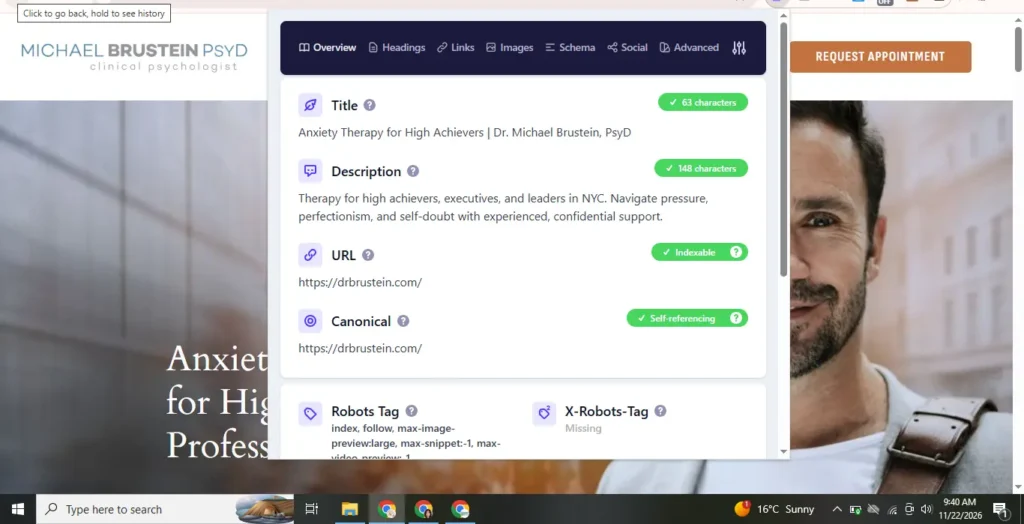
Title tag means the blue headline Google shows. It decides if a person clicks your page or the next one. Keep it under 60 characters. Start with the main keyword. Be specific about the service and the city.
Write a Short Meta Description That Invites a Call
Meta description means the short text under the title. It does not rank the page by itself, but it decides if a person clicks. How to write a meta description for a counseling website? Keep it under 155 characters. Say what you help with, who it is for, and what to do next. Use the keyword once, in a natural way. That makes it one of the cheapest wins in this seo guide for therapists.
Give Every Specialty Its Own Page
A service page means one page for one thing you offer. Not a long list on one page. Each page gets one clear job, one keyword, and one next step. This is how this seo guide for therapists turns a general website into pages that can rank and convert.
Why One Page for Each Service Works Better
Google ranks pages, not websites. A page about anxiety only can rank for anxiety. A page that lists 12 services ranks for none of them well. A reader also finds the answer fast. The page speaks to one problem, one person, and one next step. A long list makes both Google and the reader guess what you really do.
Which Service and City Pages to Create First
Start with the services you actually offer and clients actually search for. Anxiety, couples, trauma, teen, EMDR, and online therapy are common first pages. Then add location. Trauma therapist in Denver and couples therapy in Austin are clearer than a general services page. Keywords for a trauma therapy page should match what a client types. Trauma therapy, trauma therapist near me, and EMDR for trauma are good examples. Keep therapist niche seo positioning clear. One page, one niche, one city. Link each service page to your contact page and to the related local SEO for therapists
Pages for the Areas You Actually Serve
Make a page for each area you serve. One page for Denver, one for nearby Lakewood, if you serve both. Say what you offer there and how to book. Link each area page to your contact page. Only list areas you really serve.
Local SEO That Brings Clients From Your Own City
Most therapy clients search near them. Local seo strategies for therapists focus on that search. The goal is simple. Show up in the map pack and in local results when someone nearby needs help.
Why Your Google Business Profile Brings Calls
Your Google Business Profile is the listing Google shows in the map pack. It shows your name, hours, phone, and reviews. Many clients call from that listing without opening your website. Keep it complete, current, and honest.
Check If Your Profile Qualifies and Is Correct
Check first if your practice qualifies for a profile. A practice with a real office where clients visit usually qualifies. Check the name, address, phone, hours, and services. One wrong detail can send a client to the wrong place.
Keep Your Name, Address, and Phone the Same Everywhere
NAP means name, address, and phone. Use the exact same details on your website, your profile, and every directory. Small differences can confuse Google. Keep them the same, and Google trusts the listing more.
Which Directories Are Worth Keeping Updated
Keep only the directories clients actually use. Psychology Today, TherapyDen, and local health directories are common examples. Fix wrong details there first. A few correct listings help more than many wrong ones.
Reviews and Ethics: What You Must Not Do
Reviews help local ranking, but therapy has strict ethics rules. Do not ask current clients for a review. Do not offer anything for a review. Do not share client details in a reply. Protect privacy first, even if it means fewer reviews.
Write Content Your Future Clients Actually Need
Good content is how seo marketing for counseling works in practice. It answers the exact question a person typed, in plain words, and shows them the next step. It builds trust before the first call. These seo marketing tips for counseling keep content useful, not salesy. Our copywriting for therapists service follows the same approach.
- Answer the query first. Start with the question, answer it in the first lines, and do not hide it in a long intro.
- Keep it keyword optimized. Use the main keyword once naturally, use related words, and do not repeat the keyword in every sentence.
- Cover one topic in depth. Write a few posts on one category, such as anxiety, sleep, and panic, so Google sees real depth.
- Choose blog topics that rank. How much does therapy cost, what happens in a first session, and how to find a therapist near me are good examples.
- Keep length useful. Use as many words as needed to answer well, usually 600 to 1000 words for a guide, and shorter for a simple question.
- Answer questions before a first appointment. Cover insurance, what to expect, how to book, and privacy.
- Do not miss telehealth. Make a clear telehealth page that explains how it works, where you are licensed, and how to book online.
Technical SEO That Makes Your Site Fast, Safe, and Easy to Use
Technical SEO means work behind the scenes that lets Google find, load, and trust your site. If your site is slow or broken, good content will not rank. Fix the basics first, then check them again on a regular basis. Our technical SEO for therapists service follows the same checklist.
- Site speed: Site speed means how fast a page opens. If it opens slowly, a visitor leaves before reading it. Compress images and remove heavy extras, so the page opens fast.
- Core Web Vitals: Core Web Vitals means the way Google measures speed and stability. It checks how fast the page loads, how fast a visitor can click, and whether the page jumps while loading. Fix the slow parts first.
- Responsive design: Responsive design means the site changes its shape for a phone screen. Text stays easy to read, and buttons stay easy to tap.
- Works well on a phone: Check the site on a real phone. If a visitor cannot read it or cannot tap the call button, the site is not ready.
- Google guidelines: Google guidelines mean the basic rules Google asks every site to follow. Use clear titles, real content, and no hidden tricks.
- Easy to navigate: Easy to navigate means a visitor can find what they need in one or two clicks. Keep the menu short, and make the contact page easy to find from every page.
- Site architecture and URL structure: Site architecture means how the pages are arranged. URL structure means the address of each page. Use simple addresses, one topic per page, and a clear path from the home page to each service page.
- HTTPS, SSL, and XML sitemap: HTTPS and SSL mean the site is secure, so a visitor sees a lock sign in the browser. An XML sitemap means a list of your pages for Google, so Google can find every page you want ranked.
- Proper setup from the beginning: Proper setup means fixing speed, mobile, security, and structure before you add more content. It is easier to build it right first than to fix it later.
- Regular website audits: A website audit means a regular check of the whole site. Check speed, mobile, links, and errors every month, and fix the small problems before they grow.
Off Page SEO That Builds Trust Outside Your Website
Off page SEO means the work outside your own website that builds trust. Google sees links and mentions from other sites as a sign that your practice is real and trusted. One good link helps more than many weak ones. Our off page SEO for therapists service follows the same idea.
- Local citations: A local citation means your name, address, and phone appear on another site. Keep the details exactly the same everywhere. Correct citations help Google trust your location.
- Backlinks worth pursuing: A backlink means another site links to your website. Pursue links from trusted sites only, such as a local news site, a university, a professional association, or a respected mental health site. Do not buy links, and do not use spammy sites.
- Directories that double as backlinks: A directory means a site that lists therapists, such as Psychology Today or TherapyDen. A good directory gives you two things at once, a citation and a backlink. Keep your profile there complete and correct.
- Guest posts on reputable mental health blogs: A guest post means you write a helpful article for another trusted blog. Choose a blog your future clients already trust. Write in plain words, share real advice, and link back to one useful page on your site, not to every page.
How to Measure Your SEO Without Guessing
Measure SEO by inquiries and first sessions, not by traffic alone. Two free tools from Google show you almost everything you need. Check them once a month, and judge progress over 60 to 90 days, not over one week.
- Google Search Console: Google Search Console means the free tool that shows how your site appears in Google search. Every therapist needs it. It shows what people searched, which pages showed up, and how many people clicked.
- What to measure in Search Console: Measure clicks, impressions, position, and queries. Clicks mean people visited your site. Impressions mean your page showed up. Position means where it showed up. Queries mean the exact words people typed.
- Google Analytics and the numbers that matter: Google Analytics means the free tool that shows what visitors do on the site. Look at where they came from, which pages they visited, and how many reached your contact page. Do not track personal health details, and keep your analytics privacy safe.
- Reading your positions in Google search results: Position 1 to 3 gets most clicks, and position 10 still beats page 2. Track your main keywords each month. Early movement often shows in 60 to 90 days, and competitive terms can take 4 to 6 months.
How to Put SEO Into Action on Your Website
You have two options. Do it yourself, or hire an expert who already knows therapy SEO. The right choice depends on your time, not your interest. SEO takes steady work every week, and one wrong step can cost you months.
- Do it yourself: Do it yourself means you learn the basics, do keyword research, write and publish content, and build your presence and links. Seo training for therapists and smart marketing for therapists training can help you start, but it still takes hours every week.
- Hire an SEO expert: An expert does the work for you, and avoids the costly mistakes. Check the budget first, and ask what is included. Find an expert who knows therapy ethics, privacy, and local SEO, and who shows real work, not a ranking promise.
- Why choose us: We have worked with more than 50 therapists. We do keyword research, content, local SEO, technical SEO, and links in one place. You focus on clients, we focus on getting you found. Contact us today and start with a clear plan, not a guess.
What a 30 to 60 to 90 Day SEO Plan Should Include
- Days 1 to 30: Fix the basics, do keyword research, build service pages, and fix your Google Business Profile.
- Days 31 to 60: Publish helpful content, build local pages, and fix technical problems.
- Days 61 to 90: Build trusted links, measure clicks and inquiries, and improve what is already working.
SEO vs Google Ads: Which One Should Come First?
SEO and Google Ads both put you in front of people who search. The difference is time and cost. SEO builds free clicks over months. Ads buy clicks today, and stop when payment stops. The best choice depends on what you need right now.
- SEO: SEO means you rank in the free results. It takes time, with early movement often in 60 to 90 days, and competitive terms in 4 to 6 months. Once it works, clicks keep coming without paying for each one. Clients also trust free results more.
- Google Ads: Google Ads means you pay for each click. It works today, and you can test which keywords bring calls. It is useful when you need clients now, but costs rise as soon as you stop paying.
- Which comes first: If you need clients now, start Ads first, and build SEO at the same time. If your budget is tight, start SEO first, and add Ads later for urgent gaps. Most practices do best with both. Ads bring clients now, SEO builds clients for the future.
- Let us do it for you: Do not waste months guessing which one works. We have worked with more than 50 therapists. We build your SEO and manage your Ads in one plan, so you get clients now and keep getting them later. Contact us today, and let us do the work for you.